Hip Osteoarthritis
What is osteoarthritis?
Osteoarthritis is a disease that affects the joints of the body. The surface of the joint is destroyed and the neighboring bone undergoes hardening. The term osteoarthritis is also used in the international literature and comes from the Greek words bone and arthritis. When the joints are swollen and damaged, they are painful and difficult to move. Other words that are often used to describe osteoarthritis are simply “arthritis” and “degenerative arthritis”
What does the hip joint look like?
To understand how hip osteoarthritis develops, we need to know how a normal joint works.
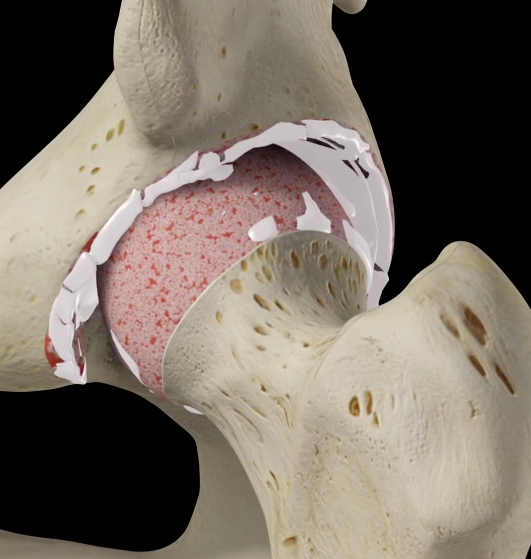
The joint is where two bones meet. Most of our joints are designed to allow bones to move in various directions. The hip (hip) is the second largest joint in our body and is a spheroidal joint and consists of the femoral head (sphere), which articulates with the acetabulum (“cup”). It plays an important role by receiving large loads, since the weight of the body is transferred to the lower limbs through it. At the same time, it shows remarkable stability to ensure the safe movement of the legs while walking. The surfaces of the two bones (femur and iliac ) that come into contact are called articular surfaces. In order to achieve the smooth sliding of one surface on top of the other, they are equipped with articular cartilage, which has a small coefficient of friction. Articular cartilage exhibits such smoothness that it could be likened to glass or ice, and it also acts by absorbing shocks. It is no coincidence that histologically it is called vitreous cartilage. Thus, the movement of one surface on top of the other is like an ice cube sliding on the ice.
The joint is surrounded by a membrane (hymen), which produces a viscous fluid (synovial fluid). This fluid helps nourish the cartilage and lubricate the joint. The synovial membrane has an external resistant layer, which is called the synovial bursa and offers to the stability of the joint in an adjunct to the ligaments. Tendons are strong connective elements that connect the muscles to the bones on each side of the joint and carry the movement of the muscles. When a muscle contracts, it shortens, the force is transferred to the tendon, and it pulls the bone and causes the joint to move.
What are the two forms of osteoarthritis?
Unfortunately, the hip joint is one of the most common areas of osteoarthritis development. Osteoarthritis of the hip means wear and tear of the joint and can be:
- primary (idiopathic), when it is due to an unknown cause.
- secondary, that is, to be the result of another pathological condition.
Osteoarthritis of the hip, if primary, mainly affects patients over the age of 50. However, when it is secondary , then it also appears at younger ages, sometimes even in the third decade of life. In both cases the result is the same: the gradual destruction of articular cartilage.
How does hip osteoarthritis progress?
If one were to observe osteoarthritic cartilage in magnification, one would discern a softening and fibrillation (“fraying”) of the cartilage in the early stages. In the next stage of osteoarthritis, its destruction and lack of it in various areas is obvious, so that there is a bare bone. This causes the friction between the two bones to increase. At an even more advanced stage, microfractures are created, i.e. a small subsidence of the areas that have been stripped of articular cartilage. These lesions are the beginning of a series of concomitant lesions that occur in the joint itself and in the neighboring areas and are responsible for the feeling of pain and stiffness experienced by the patient. The membrane swells and produces more synovial fluid. This in turn causes the swelling of the joint, which in the case of the hip is not visible, as it is a deep joint. The bursa and ligaments gradually thicken and are in contraction as if trying to keep the joint in its original shape. The muscles that move the joint gradually weaken and atrophy.
Hip osteoarthritis is a slow process that progresses over many years. In most cases there are only minor changes, and lesions that affect only a small part of the joint. Sometimes, however, osteoarthritis can be very severe and extensive. In severe hip osteoarthritis, the articular cartilage can become so thin that it no longer covers the thickened hypochondrial bone at all. The bones then touch, rub against each other and begin to wear out. Cartilage loss, bone wear, and bone hyperplasia at the edges all combine to change the shape of the joint. This shifts the bones from their normal position and causes deformity.

Can hip osteoarthritis go away?
When we look at an osteoarthritic joint under the microscope, we see that the joint is trying to repair itself. All tissues are more active than usual and new tissue is produced in an attempt to correct the destruction. In some types of osteoarthritis, especially in the small joints of the fingers, the repair is relatively successful. This explains why some people have osteoarthritis but have few discomforts. Unfortunately, in osteoarthritis of the hip, self-repair usually does not succeed and as a result the joint is severely affected and becomes painful and cumbersome.

Symptoms of hip osteoarthritis?
The main symptoms are pain and stiffness. The pain is usually felt in the groin (rhizomerion), i.e. in the anterior area of the joint and can radiate up to the knee. It occurs mainly after periods of intense physical activity, while gradually becoming more and more frequent, even at rest. When the pain occurs at night and wakes the patient from sleep, then there is usually advanced osteoarthritis. Stiffness (difficulty in moving the joint) is felt at first after long hours of rest. Later it increases progressively, reaching the point where there is difficulty for the patient to put on his socks or shoes. In the final stages, lameness may occur (the patient limps).
Pain can vary. There are “good” and “bad” days, or even more, “good” and “bad” months, for no apparent reason. Changes in weather can cause differences in pain. For example, joints may hurt more before it rains. ‘All joints have nerve endings, which are sensitive to atmospheric pressure, and thus, a fall into it before rain affects the pain. If arthritis progresses, mobility is limited. Walking short distances or ascending and descending stairs can become problematic.
Does hip osteoarthritis vary in different people?
Hip osteoarthritis affects different patients in different ways. Some people have a problem with only one hip, some others with both. In some it may be associated with some congenital malformation, in some with childhood diseases such as epiphysealosis or Leg-Perthes-Calve. Pain is the main problem for some, while for others the main problem is difficulty walking and lameness. In some people, osteoarthritis can be stagnant for several years, while in some people it can get worse rapidly. Therefore, it is not useful to compare the personal experience of one person with another, as we cannot predict the outcome of the disease.
How does the doctor diagnose osteoarthritis of the hip?
The most important part of the diagnostic process is the taking of the history and the clinical examination by the orthopedist to look for the signs and symptoms mentioned above. Diagnostic signs for hip pathology are the restriction of hip movements, especially in turns, and the pain they cause. However, they can also come from other diseases besides osteoarthritis. The orthopedist should understand what is the degree of disability caused by the condition to the patient, and whether the pain really comes from the hip joint or some neighboring area. In most cases, a simple X-ray of the joint is enough to complete the diagnosis. However, some patients may need further investigation, in the form of blood tests, CT and MRI scans or bone scintigraphy in order to rule out other conditions with similar symptoms.
Which tests confirm hip osteoarthritis?
There is no osteoarthritis-specific blood test, although some blood tests are used to investigate other types of arthritis. A simple X-ray is the most useful test to confirm osteoarthritis. Usually, it will show that the space between the two bones has narrowed as the cartilage has thinned, or it may show lesions in the bone such as “salts”, i.e. osteophytes. Calcifications are also visible on X-rays. Although X-rays help diagnosis, it cannot predict the severity of the symptoms. An X-ray with advanced osteoarthritis does not necessarily mean severe pain or disability.
How can hip osteoarthritis be treated?
The progression of osteoarthritis cannot be predicted and there is no cure for it. But there are many treatments. Treatments can help:
- in pain relief
- to reduce stiffness
- slowing down the further destruction of the joint.
Can medications help hip osteoarthritis?
At the moment, there are no drugs that demonstrably influence the progression of osteoarthritis, although glucosamine sulfate and chondroitin are widely used for this purpose. However, some medications can help the symptoms of arthritis:
- Painkillers, such as paracetamol, and anti-inflammatories can help with pain and stiffness. Anti-inflammatories usually help more than just paracetamol (Depon, Panadol, etc.), but have more side effects / complications (gastric bleeding, ulcers, enterorrhages). Therefore, they are not recommended for long-term use. They also interact more often with other treatments that the patient may be taking, which is why a discussion with the doctor is needed.
- Topical corticoid injection, which is common for the knee, is not a common hip practice because it requires an X-ray examination to carry it out.
Can surgery help with hip osteoarthritis?
Hip arthroscopy can, with the flushing performed and the removal of free cartilage bodies or parts of damaged cartilage, help to temporarily remission the symptoms for some time. Nevertheless, arthroscopy in cases of advanced osteoarthritis can only save time and is not a permanent cure. But it is a relatively minor surgery. The only permanent solution for hip osteoarthritis is total hip arthroplasty, which is the replacement of the joint with a metal prosthesis.
What can I do to help myself?
You can help yourself by making changes to your lifestyle and habits, such as:
- Weight loss if you are overweight. There is no specific diet for osteoarthritis. However, it is always good to avoid high-calorie foods.
- Gluteal and quadriceps exercises. The gluteals and quadriceps atrophy in patients with hip osteoarthritis because the nerve stimulus in the muscles decreases. To circumvent this problem, it is essential to do exercises as often as possible. It has been proven that strengthening these muscles not only improves mobility, but also reduces pain.
- Physiotherapy is an important means of pain relief for the osteoarthritis patient. The physiotherapist gives specific advice on torso posture and appropriate exercises aimed at reducing stiffness and improving the general condition of the body. Pain relief is also offered by machines such as laser, ultrasound and diathermy, while significant results have been shown by the use of transcutaneous electrical nerve stimulation (TENS).
- Make sure you don’t keep your hips bent in the same position for long periods (fetal position).
- Wear footwear with a thick and soft sole to absorb shock for the hip.
- Try to use your hip and mobilize as much as you can, but also rest it when it becomes painful.
- Use a stick-bacteria to relieve the joint if necessary.
Are there any possible complications from hip osteoarthritis?
- Rapid deterioration: it is more likely to occur in elderly patients with severe osteoarthritis. The pain can increase with a simultaneous decrease in mobility within a few weeks or months. Nevertheless, this rapid deterioration is relatively rare.
- Instability: if the ligaments are damaged or the muscles have atrophied, the joint may not be stable during loading. To avoid this, you need to make sure you have a good muscular system.
- Sudden flare-ups of pain: it is quite common for there to be mild flare-ups, but sometimes these can be more severe and last longer.
Frequently asked questions and answers about hip osteoarthritis
- Can a special diet help with hip osteoarthritis?
There has been extensive research on diet/nutrition and osteoarthritis, however there is no documented information that any particular food, vitamin or dietary supplement can actually help.
It is documented, however, that obesity increases the risk of developing osteoarthritis. Also, increased weight increases the likelihood of its deterioration. Therefore, a balanced diet and a balanced weight can help.
The joints do not wear out with normal use. As a general rule, we can say that it is much better to use them than not to use them! However, there should be a golden mean between excessive activity and excessive rest – inactivity. Most osteoarthritis patients find that too much exercise makes their pain worse, while their joints become stiff if left unused for too long.
For most people with osteoarthritis the best advice is little and often: a little rest followed by a little exercise. For example, do household or garden chores with short breaks. Avoid sitting in the same position for too long. A long car trip is interrupted by several stops. Activities that cause a lot of pain should be avoided, and if for some special reason you have a lot of activities, it is good to take a painkiller beforehand. Don’t worry if it causes pain. You can’t cause more damage to the joint.
Swimming is a great way to exercise, as it causes minimal pain. Water supports body weight, so a little force is applied to the joints as you exercise. Warm water relaxes and soothes muscles and joints, allowing for easier movement.
Hydrotherapy pool exercises can help muscles and joints work better without unnecessary pain. Supervised balneotherapy is an ancient treatment, but it is more exercise that helps than the healing properties of the water itself.
As mentioned above, painful joints are often sensitive to weather changes. They usually get worse when atmospheric pressure drops, such as before it rains. This explains why some people with osteoarthritis can predict rain and why joint pain seems to be linked to moisture.
However, there is no evidence that climate has long-term effects on osteoarthritis or its outcome. The weather may temporarily affect the symptoms, but not the disease itself. Osteoarthritis is found all over the world and in all types of climate.
Hot or cold compresses placed on the affected area often relieve pain and stiffness (some patients are relieved with hot ones and others with cold ones). The use of plasters should prevent burns. There are ointments that have similar effects and which can help relieve it. It must be made clear and understood that these treatments are purely palliative and do not have long-term effects. When used with caution, they are safe and soothing. There is no evidence that copper bracelets or other such measures can affect osteoarthritis. It is more the belief in them that helps some people.
Many people may offer their advice in good faith. Magazines and the media are full of articles about arthritis and its treatment. Some offer new hopes, some offer special diets or special drugs with miraculous results. Unfortunately, there are neither miracle cures nor miraculous results. It would be best to discuss your problem with your doctor.
Depression, low morale , and poor sleep can all make pain worse because they reduce tolerance to it. If you are depressed, you feel more pain. You may visit your doctor and take larger doses of pain relievers, but sometimes, what is really needed is help for depression and not for arthritis. So, treat depression and the pain becomes milder. Sleep is important. It is good not to take short naps during the day but to get a good night’s sleep, even if you need to take a painkiller before bedtime.
Why should I contact the Orthopedic Surgeon Dr. Anastasios Lilikakis for hip osteoarthritis?
Hip osteoarthritis is a gradual degenerative condition that greatly affects the range of motion of the joint and significantly reduces the patient’s quality of life. Although lifestyle changes and conservative treatments can alleviate symptoms and delay its progression, they are not a permanent solution. The most effective treatment for osteoarthritis is total arthroplasty alone. Orthopedic Surgeon Anastasios Lilikakis is the Director of the Third Orthopaedic Clinic at the Athens Euroclinic and the President of the Department of Reconstructive Hip and Knee Surgery of the Hellenic Orthopaedic Society and specializes in hip arthroplasty with minimal intervention techniques (MIS) and rapid recovery protocols. Taking into account the condition of your hip and your activity level, they can design a personalized treatment plan for your case. If you are experiencing symptoms of osteoarthritis in the hip, please contact us to book your appointment.
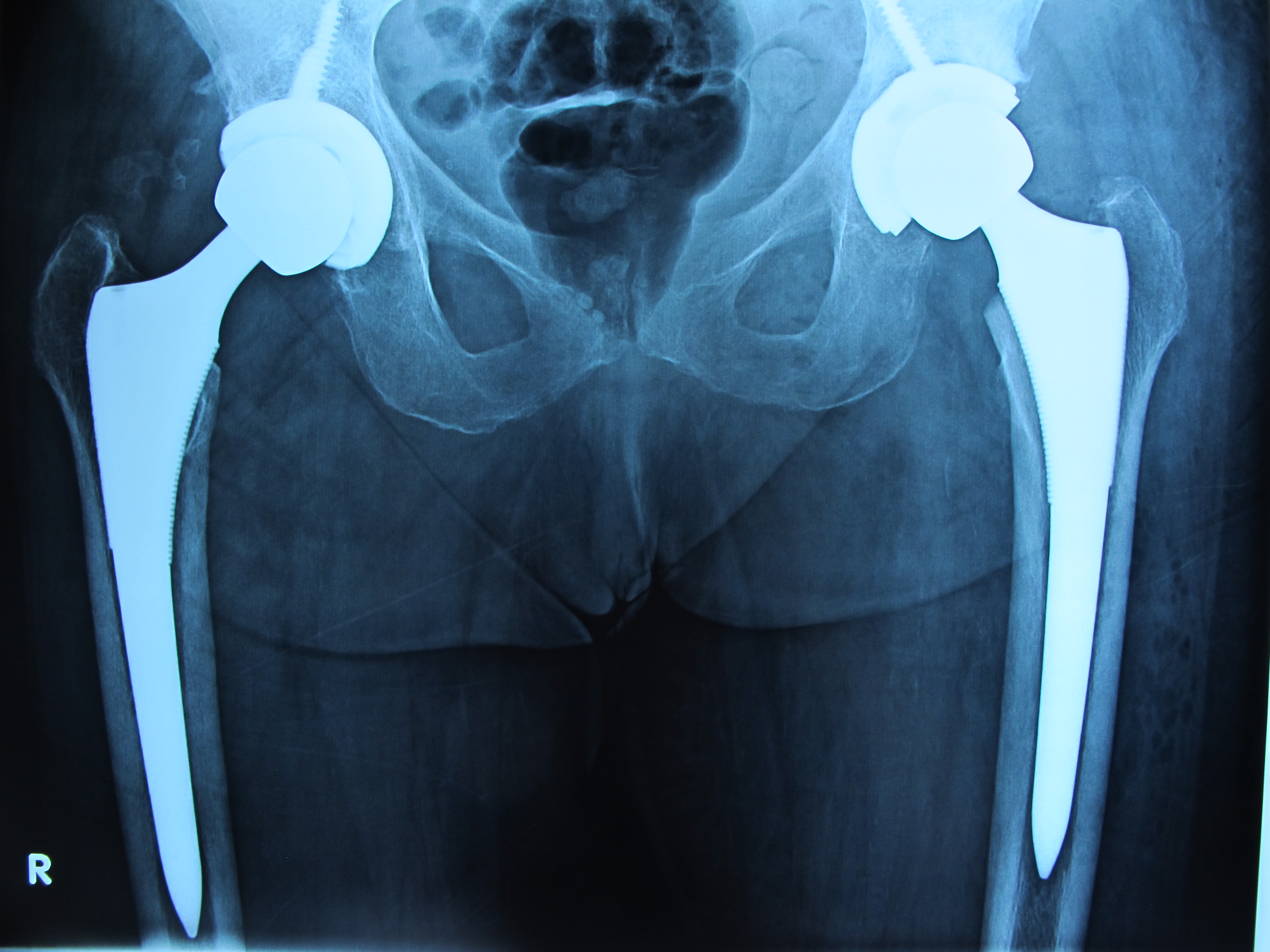
Bilateral total hip arthroplasty

 Hip Osteoarthritis

 +30 210 7292002
 alilikakis@yahoo.com