Arthritis

Arthritis has been around for thousands of years. There are several types of arthritis, however the most common are osteoarthritis and rheumatoid arthritis, which were recognized as different types in the 20th century. The truth is that until the 18thcentury all types of arthritis were thought to be due to gout (gout).
People are not the only ones who develop arthritis. Animals also suffer from it, and it has also been traced back to the ancestors of modern man. More than 50% of the population has some form of arthritis in one or more of their joints. By the age of 75 there is an 85% chance that you have developed arthritis in a joint, especially in older ones, such as the hip and knee.

Because arthritis is so common, it is a major problem of the general population. It affects not only the person, who has been affected by the disease, but also friends, relatives, colleagues and everyone who needs to provide help. The quality of life is degraded and some kind of treatment is usually required to treat the symptoms.
Treatment can be conservative, with the administration of medications, or other more invasive methods, or surgical. A large part of the occupation of an orthopedic surgeon in modern times has to do with the treatment of arthritic problems.
The two most common joints that are affected are the hip and knee. In particular, these joints are the largest in the human body. They carry the entire weight of the body and deal with all the vibrations that the lower limbs receive.
Surgical solutions can take various forms. Some are widely carried out, while others can only be carried out in specialized centers.
What is arthritis?
Arthritis can take many forms. The suffix -itis at the end of a word usually means inflammation. Here he describes the gradual destruction of the articular surface, which is caused by inflammation of the joint.
The two most common forms of arthritis are osteoarthritis and rheumatoid arthritis. However, there are other conditions that can cause arthritic-type disasters, known as arthropathies, such as:
- Ankylosing spondylitis
- Systemic lupus erythematosus
- Psoriatic arthritis
The infection can also cause problems in one joint (septic arthritis). The common feature of all forms of arthritis is the loss of gloss of the articular surface. Thus, low-friction motion is replaced by irregular, rough, high-friction motion. Changes in the joint can, in turn, cause changes in the muscles and ligaments surrounding the joint.
Osteoarthritis: The most common type of arthritis

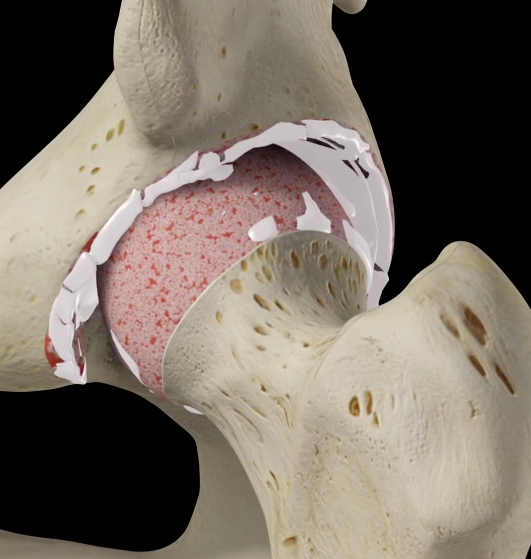
The first change that occurs in osteoarthritis is the wear and tear of the cartilage, which protects the bony surface of a joint. As the soft and shiny surface of the joint disappears, the now uneven articular surfaces cause crackling and cracking.
Small pieces of articular cartilage can become detached, creating wear products within the joint. Sometimes these decay products can accumulate and grow and create free bodies, much like when a snowball rolls down a hill. Entrapment of free bodies can result in the “locking” of a joint.
The gradual loss of articular cartilage is also associated with changes in the underlying bone (subchondral bone). This bone, which was protected by cartilage, begins to change shape visibly, often becoming flat and mushroom-like. Many other bone changes can still occur, including the formation of cysts within the bone. They are called hypochondriac cysts and can sometimes reach a large size. Also, inside the osteoarthritic joint, bony protrusions begin to form at the extremities. These protrusions are caused by the formation of new bone which is disturbed and are called osteophytes (“salts” in colloquial language) and can be painful on their own.
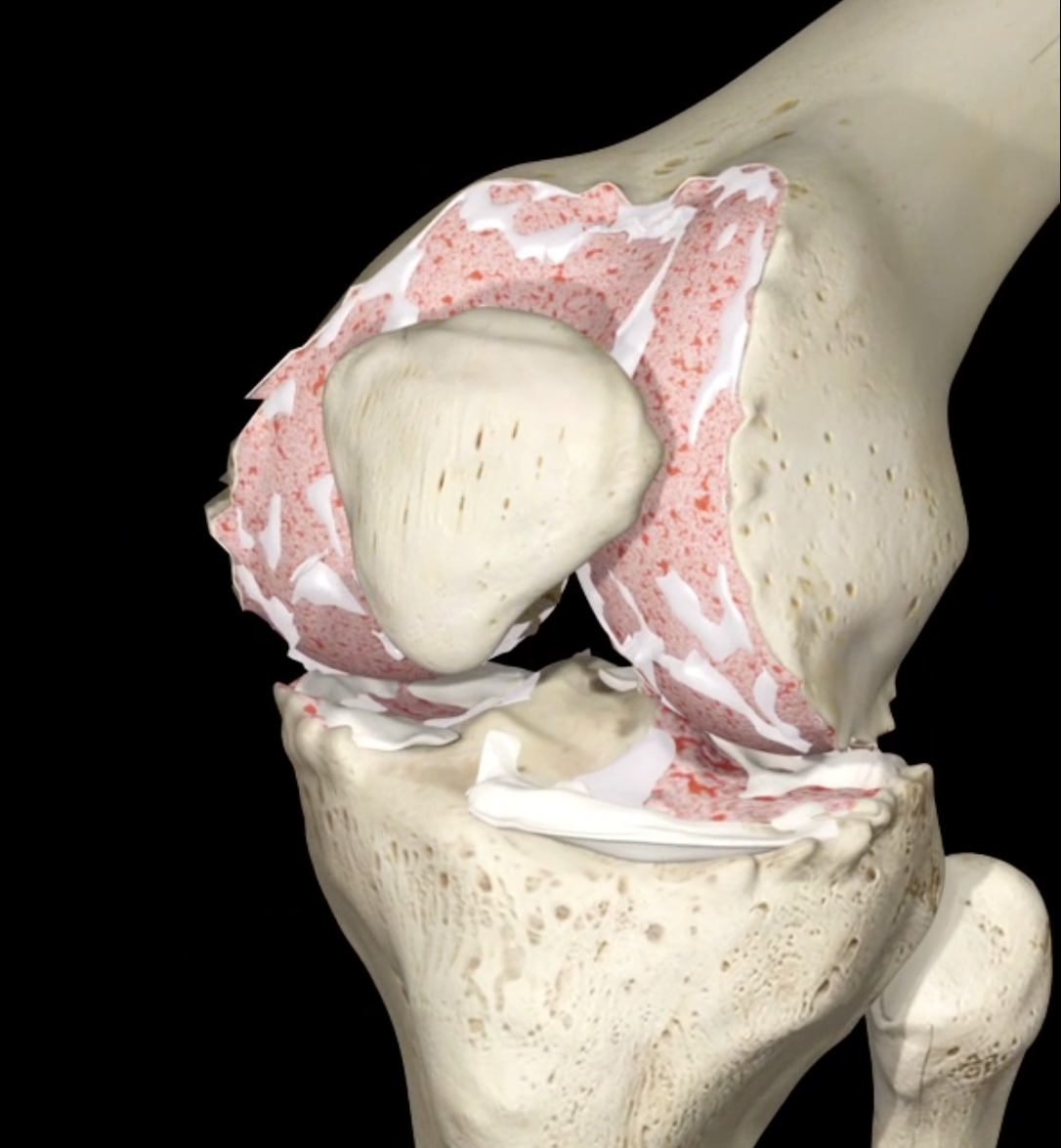
Eventually, over time the articular cartilage wears out so much that the underlying bone is exposed. The pain increases as the movement in the exposed bone has more friction (it is rubbed “bone to bone”). The synovial hymen, which produces synovial fluid, which lubricates the joint, also changes, becomes inflamed as a result of inflammation. In some cases, a large amount of synovial fluid accumulates, causing hydroarthritis. This means that the joint becomes swollen and painful, as too much fluid is produced.
Rheumatoid arthritis
Rheumatoid arthritis is very different from osteoarthritis. Several causes have been proposed, including abnormalities in the immune system, but none have been fully established.
It starts as an inflammation of the lining of the joint (synovial membrane), which is called synovitis. Gradually this inflammation becomes uncontrollable and results in extensive destruction of the cartilage. While rheumatoid arthritis may be limited to the hip or knee, it often affects other joints in the body as well. The upper limbs, and especially the hands, are very often affected. Rheumatoid arthritis is not usually associated with cysts in the bone or osteophytes.
Septic Arthritis
Hip and knee infections were very common in the past. With the improvement of living conditions, such infections have become less common but are still common in the developing world.
Bacteria can enter the joint either directly, as can happen during an injury, or through another point in the body. For example, an infected nail incubation can send the bacteria to the corresponding knee or hip.
Infection in one joint can be devastating for articular cartilage, which is particularly sensitive to the effects of bacteria. Within a few hours, this protective surface can be damaged. Unfortunately, articular cartilage cannot heal. Once the surface is damaged, there is no cure. For this very reason, septic arthritis is considered a surgical emergency.
The operating room can clean the joint, administer topical antibiotics, and gather information about the identity of the microbe causing the infection. In this way, the appropriate antibiotics can be administered.
Other causes of arthritis
There are other conditions that can cause arthritis of the hip or knee. Hemorrhagic diseases such as hemophilia, and metabolic problems, such as gout or diabetes, can damage joints.
Gout (gout), for example, is caused by the presence of elevated uric acid in the blood, often for unexplained reasons, or as a consequence of drug treatment, hypothyroidism or other hormonal disorders, and rare metabolic diseases. Uric acid crystals settle on the joints and cause extreme pain.
Signs and symptoms of arthritis
Arthritis of the hip or knee primarily causes pain. However, it can also cause deformity or swelling of the joint. The joint may be unstable when loaded or manifest cracking with movement.
The pain may initially be intermittent, but will eventually become permanent. Initially, it can only be caused by exercise, but in the end it will also exist during rest. It can also sometimes be so powerful that it exists at night. Sleep becomes impossible, and the general condition of the patient deteriorates as a result of this.
Hip pain does not necessarily mean that the hip joint has the problem. The same goes for knee pain. Perhaps the pain is reflexive. In this case, the problem exists in one part of the body, but causes pain in another neighboring place. This fact is often seen by doctors. This is the result of complex nerve delivery to various parts of the body. For example, hip problems can sometimes cause knee pain and back problems can cause hip pain.

What causes joint deformity?
As the articular cartilage is destroyed, the joint is deformed. The knee may be permanently in flexion, a deformity known as flexion contraction. In the hip respectively, the patient may not be able to fully stretch the hip joint. The knee can also manifest itching (more common) or hallux valgus. These deformities cause strain on other joints, such as the ankle and lumbar (waist). Thus, it is not uncommon to see patients with arthritis of the hip or knee having problems with the waist or ankle joint.

What are the most frequently asked questions for the patient with joint pain?
Patients with a painful joint who see a doctor for the first time may be asked a variety of questions, including:
1. What is your age?
2. What work do you do/have you done?
3. Do you suffer from other conditions?
4. Are you taking medication for a reason?
5. Do you have a family history of arthritis?
6. When did the pain start?
7. What causes the pain?
8. Is the situation improving or getting worse?
9. Where is the pain? Where does it reflect? How is it relieved? etc.
Paraclinical examinations for arthritis
Not all patients need paraclinical tests of some form (blood tests or x-rays). In simple cases, the diagnosis is made exclusively by the patient’s symptoms and the clinical examination. In more complex cases , the following paraclinical examinations may be necessary.
BLOOD TESTS
Blood tests may be done to check:
- the degree of inflammation in the body (Sedimentation Rate of Redness, ETK and/or CRP).
- the possibility of infection.
- the immune system for the existence of antibodies.
- the level of uric acid.
RADIOLOGICAL EXAMINATION
Radiological imaging of osteoarthritis is different from that of rheumatoid arthritis. In osteoarthritis we can see osteophytes and bone cysts combined with a narrow space between the two bone surfaces. This narrow space represents the gradual wear and tear of the articular surfaces. Free bodies can also be seen.
In the case of rheumatoid arthritis, the situation is different. There are usually no osteophytes, but there is a diffuse thinning of the bone, particularly in the joint area, as could be the case with osteoporosis.
Often the radiological lesions of rheumatoid arthritis are not significant, although the pain can be unbearable. This is a reflection in part of the wear and tear of the bone and articular cartilage, but also of the pain created by the synovitis of rheumatoid arthritis. The synovial membrane, however, cannot be seen on a simple X-ray.

What other tests are performed for arthritis besides blood tests and radiological examination?
Many different tests may be done to help diagnose and understand arthritis. The area can be tomatographed (Magnetic Resonance Imaging, Computed-Computed Tomography, Bone Scintigraphy), or a biopsy can be performed. During the biopsy , a sample of joint tissue is taken, and and/or puncture of the joint can be performed. During puncture, if there is fluid inside, it is taken and sent for analysis.
Arthroscopy (surgery using a camera) can also be performed as a method of investigation. In this case, small arthroscopic instruments (4.5 mm in diameter) are placed inside the joint by small incisions. Thus, samples can be taken from specific areas that have been damaged. Knee arthroscopy is widespread, but hip arthroscopy is also becoming more and more widespread worldwide, but also in our country.
In summary, arthritis is a condition that seriously affects the daily lives of patients, as it can cause inflammation around the joints, pain and stiffness. Early clinical examination and modern imaging methods allow for an accurate diagnosis and the selection of the appropriate treatment strategy.
Medication and physiotherapy can help control symptoms, while in more advanced stages surgery provides a solution, helping to restore mobility. At the same time, adopting a healthy lifestyle can increase the effectiveness of treatment, making a holistic approach essential for improving patients’ quality of life.
If you experience symptoms that indicate arthritis, trust a medical practitioner with years of experience and leadership in the field of reconstructive surgery. Orthopaedic Surgeon Anastasios Lilikakis is the Director of the Third Orthopaedic Clinic of the Athens Euroclinic and the President of the Department of Hip & Knee Reconstructive Surgery of EEHOT. Contact us and book your appointment.

 Hip Osteoarthritis

 +30 210 7292002
 alilikakis@yahoo.com