Minimally Interventional Hip Arthroplasty (MIS)
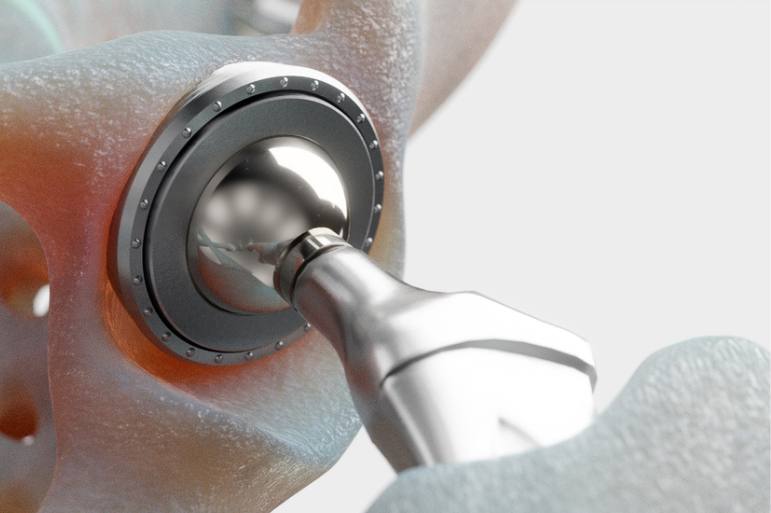
Total hip arthroplasty was described a few years ago as “the operation of the20th century” and is certainly one of the most successful surgeries, which offers a better quality of life to millions of people around the world and in Greece. Today, Minimal Intervention Hip Arthroplasty (MIS) is a documented evolution of the method, ensuring faster recovery, less pain and excellent functional results.


A few words about minimally invasive hip arthroplasty (MIS)
Total hip arthroplasty can be performed through various surgical approaches that are distinguished from each other by their relationship with the gluteal medius muscle. Their nomenclature basically comes from the surgeons who described them, while there are various modifications in each approach.
At the beginning of the21st century, in the context of the continuous improvement of the operation, in sequence with other surgical (orthopedic and non-orthopedic) procedures, surgical approaches for total hip arthroplasty were described that use smaller incisions in the skin and cause reduced tissue damage. All of them are based on some classic approach. Each has advantages and disadvantages and may require the use of:
- X-ray scopy,
- special implants,
- navigation systems or robotics,
- traction surgical bed.
Minimally Invasive Surgery (in a loose version of the English term Minimal Invasive Surgery that has prevailed) is an identical operation to the classic total hip arthroplasty.
Minimally Interventional Hip Arthroplasty (MIS) is performed through a smaller skin incision, usually 8–12 cm. Its application may be more challenging in cases:
- stiff hips.
- hips that have been badly damaged.
- congenital malformations.
- hips that have undergone previous operations
- very large patients.
For its successful execution, specialized surgical technique and specially designed tools are required.


In which cases is the operation indicated?
Minimal Intervention Hip Arthroplasty is a modern development of total arthroplasty. It is designed to achieve the same functional results with the least possible tissue destruction and is applied in the same cases as conventional total hip arthroplasty.
Conditions that usually lead to total hip arthroplasty include:
- Hip osteoarthritis, which consists in the extensive destruction of articular cartilage.
- Rheumatoid arthritis and other inflammatory arthritis, which cause chronic inflammation and gradual erosion of the articular surfaces.
- Aseptic necrosis of the head of the femur.
- Post-traumatic arthritis.
- Congenital malformations or anatomical abnormalities of the hip, which cause chronic mechanical stress and premature degeneration of the joint.
Who are the right candidates?
The technique of Minimal Intervention Hip Arthroplasty (MIS) is indicated in almost all patients, under specific conditions. However, more suitable patients are younger people or people with intense sports activity. These patients want faster postoperative recovery and an early return to daily or sports activities.
In addition, the technique is preferred when there are no serious anatomical deformities, previous surgeries in the area or advanced osteoporosis, which would limit the stability of the implants.
The success of the method depends decisively on the experience and specialization of the surgeon, as well as on the availability of specialized equipment and tools that allow the operation to be performed through a smaller incision and with minimal disruption of muscle and periarticular tissues.
The combination of these factors leads to:
- reduced postoperative pain.
- minimizing blood loss.
- acceleration of functional rehabilitation.
- better alignment and longevity of prostheses.
References on hip arthroplasty
The literature on the subject is now rich and constantly enriched, due to the increased interest from the orthopedic community. In most studies, researchers report less pain, better gait and faster recovery in patients who underwent minimally invasive hip arthroplasty.
However, these findings are visible only for the first few weeks, after which there are no differences between patients who underwent minimally invasive arthroplasty and those who underwent “conventional” arthroplasty. The literature also shows that patients are very happy with the smallest incision.
No surgical approach is completely free from causing muscle damage, even to a limited extent. Also, no approach is completely bloodless, as some degree of muscle cross-section is always caused. Nevertheless, in terms of tissue destruction, anterior access seems to be superior to other techniques, both in terms of minimizing tissue damage and in terms of faster functional recovery.
However, faster postoperative recovery is achieved only when the minimally invasive technique is combined with modern perioperative protocols Fast-Track or, in other words, Enhanced Recovery. In particular, these protocols include anaesthesiological and pharmaceutical support, early mobilization, etc.
What are the conditions for success of minimally invasive hip arthroplasty (MIS)?
In conclusion, the successful implementation of Minimal Intervention Hip Arthroplasty requires an experienced surgeon. In order for a surgeon to become experienced in arthroplasty, he must perform at least 50 total hip arthroplasties per year. In addition, he should have the necessary surgical familiarity and technical proficiency.
Patients seeking a rapid return to their activities benefit most when the operation is performed in an integrated group setting. This group includes anesthesiological and physiotherapeutic support and modern perioperative protocols are applied, the now well-known Rapid Recovery Protocols or Fast-Track.
The surgeon can choose the approach with which he already has sufficient experience, be further trained in specialized centers with a corresponding technique, and with the use of specialized tools select suitable patients, gradually reducing the scope of surgical access until he can apply minimally invasive surgery techniques safely and consistently.
If hip pain significantly impairs your quality of life, trust a physician with many years of experience and leadership in the field of reconstructive surgery. Orthopaedic Surgeon Anastasios Lilikakis is the Director of the Third Orthopaedic Clinic of the Athens Euroclinic and the President of the Department of Hip & Knee Reconstructive Surgery of EEHOT. Contact us and book your appointment to learn more about minimally invasive hip arthroplasty.

 Hip Osteoarthritis

 +30 210 7292002
 alilikakis@yahoo.com