Arthritis Treatments
Arthritis is the most common joint disease in our time, significantly affecting the mobility and quality of life of patients. It is an inflammatory process that can be due to degenerative, autoimmune or post-traumatic causes. Modern arthritis treatments aim not only to relieve pain and inflammation, but also to maintain joint functionality and prevent permanent alterations. The choice of the appropriate treatment approach is individualized according to the type of arthritis, the severity of the symptoms and the needs of each patient.
ARTHRITIS TREATMENTS: WHAT OPTIONS ARE THERE AND WHAT ARE THEY DETERMINED BY?
For any form of arthritis, surgery is usually chosen after the failure of other treatment approaches. It is preferable, and usually safer, to treat the joint problem at first conservatively. Patients can experience the effects of a range of treatments including:
- of the treatment of medication
- of weight loss
- of physiotherapy
- of osteopathy and/or chiropractic
- and, most importantly, the exercise of
Despite all these efforts, conservative methods at some point fail to relieve patients from the symptoms. In this case, the possibility of applying invasive therapeutic methods should be considered.
The simplest invasive method is an injection – infusion, where a mixture of local anesthetic and corticoid is injected into the affected joint. The local anesthetic has a temporary analgesic effect, but the corticoid can have a longer lasting effect. The goal is to reduce inflammation, which is associated with arthritis.
Also, very often we choose a single injection or a series of injections of hyaluronic acid into the joint. The goal is to “lubricate” the joint, which has a relieving effect on symptoms. Early results are promising, but no cure is provided.
In recent years, the use of new methods of regenerative orthopedics by injecting platelet-rich plasma (PRP) or stem cells from the patient’s fat or marrow into the joints has gained more and more ground. The goal is to relieve the patient and delay the progression of osteoarthritis and the results are very encouraging.
Despite the injections, arthritis will progress, at a different pace, with surgery being the final and permanent solution. Over the centuries, surgeons have planned a number of operations. The following procedures can be performed under either general or local anesthesia. A combination of both is also sometimes used.
OSTEOTOMY
Osteotomy means the incision of the bone. In the past it was widely used for arthritis of the hip and knee. The aim is to create an iatrogenic – surgical fracture, so that the hip or knee is re-aligned, as a result of which the loads of walking pass through the joint in a different way.
For example, a curl or a hallux valgus knee can be made straight again with the use of an osteotomy. When the knee is streaked the gait loads pass through the inner surface of the knee, causing faster wear. With the knee aligned, the loads pass through the center of the joint. Thus, both sides of the knee (inside and outside) are charged equally. The result is twofold. First, the patient is relieved of the increased loads that were accumulated in a single compartment. Secondly, further destruction of the joint is delayed. The same logic can be applied to the hip where osteotomy is usually performed at the level of the trochanter.
Osteotomies are major operations and are successful in specific groups of patients, especially the youngest, in order to save the joint and delay arthroplasty, which is considered the final solution. They are also more successful in patients, who have a good range of motion of the specific joint. The shorter the range of motion before surgery, the less likely it is that an osteotomy will help the situation.
Osteotomy alters the length of a patient’s leg, making it shorter or longer than the other, depending on the type of osteotomy. Osteotomies in the hip area were very common in the past in our country and fewer nowadays. More specifically, they are mainly used in patients with congenital hip dysplasia, in order for the femoral head to be better focused on the acetabulum and concern both femoral and iliac pelvic bone osteotomies.
ARTHROSCOPY
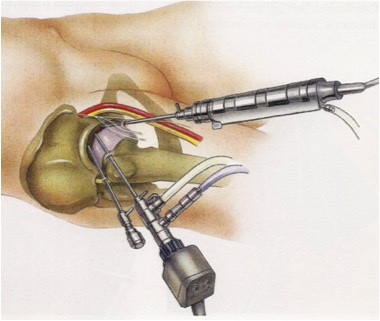
Arthroscopy is currently widely performed. Knee arthroscopy is a very common procedure, while hip arthroscopy is not as common. However, it has been developing rapidly all over the world in recent years and is successfully carried out in our country by specialized surgeons.
The principle of arthroscopy involves the insertion of a small instrument-camera, usually 4.5 mm in diameter, into the joint under general or local anesthesia. This tool is called an arthroscope. This allows for an excellent view of all the elements within the joint and a very accurate estimate of the progress of the situation.
The operation can be used for all forms of arthritis and is usually short-lived. With the arthroscope placed inside the joint, other surgical instruments from other equally small incisions can be placed. Thus, it is possible to:
- remove any free bodies, e.g. detached cartilage
- to rejuvenate and cauterize cartilaginous surfaces
- to remove torn parts of meniscus in the knee or cartilage on the hip that cause pain
- to flush the joint.
What an arthroscopy cannot do, however, is to eliminate arthritis. The effects on the patient’s symptoms vary. Some patients experience dramatic pain relief, while others claim to have worsened. The use of arthroscopy in the treatment of arthritis should therefore be done wisely as the complication rate is low but it exists.
It is often used to “buy time” on a joint, delaying longer surgeries. It is especially useful in younger patients who are still very active and for whom a major surgery such as joint replacement would not be a prudent choice.
ARTHRODESIS
Arthrodesis means the “binding” of a joint. Patients who have arthritis experience severe pain, which is caused by the movement of worn arthritic surfaces. The more a joint moves, the greater the pain.
Therefore, joint arthrodesis surgically is a way to eliminate pain. However, by performing an arthrodesis the joints above and below the joint in which the arthrodesis was performed shoulder greater loads. For example, with a knee arthrodesis, the hip and ankle are subjected to greater loads. In a hip arthrodesis, the knee and spine receive greater loads. The advantage of an arthrodesis is that it does not involve the implantation of movable joint implants. As a result of this there is little room for failure.
However, gait is significantly affected, as it is not possible for a patient to walk with a normal gait when a hip or knee arthrosis has been performed. The operated leg is also shorter, and there is a limitation of the range of motion of this leg in general and not only the operated joint.
If necessary, an arthropodized joint can be converted into a total arthroplasty, but the conversion is technically demanding and the results are not always as good as an arthroplasty performed on a joint that has not been operated on before.
Arthrodesis of the hip and knee in the past was common, usually in cases of tuberculosis, but also in severe arthritis. Nowadays it has been replaced by total arthroplasty. Arthrodesis is currently most often performed in the joints of the hand and foot.
DEBRIDEMENT

Debridement is a surgical term for cleaning an area. Arthritis causes the formation of free bodies and osteophytes. These can cause pain or can cause a joint to “lock” or lose its stability.
Therefore, removing them several times has advantages. Such a cleansing operation does not eliminate arthritis. Sometimes this cleaning can be performed arthroscopically, although it is often performed as an open operation, in which case a surgical incision is required. This enables access to all hard-to-reach points of the joint, allowing for extensive and effective cleaning of the area.
Results vary, while complete pain relief is not very likely for a long time. However, such a cleaning can provide valuable time for younger patients before a larger surgery becomes necessary.
At the same time, it can prove particularly useful in elderly patients who are unable to undergo longer operations or prolonged anesthesia.
TOTAL ARTHROPLASTY: ONE OF THE MOST EFFECTIVE ARTHRITIS TREATMENTS
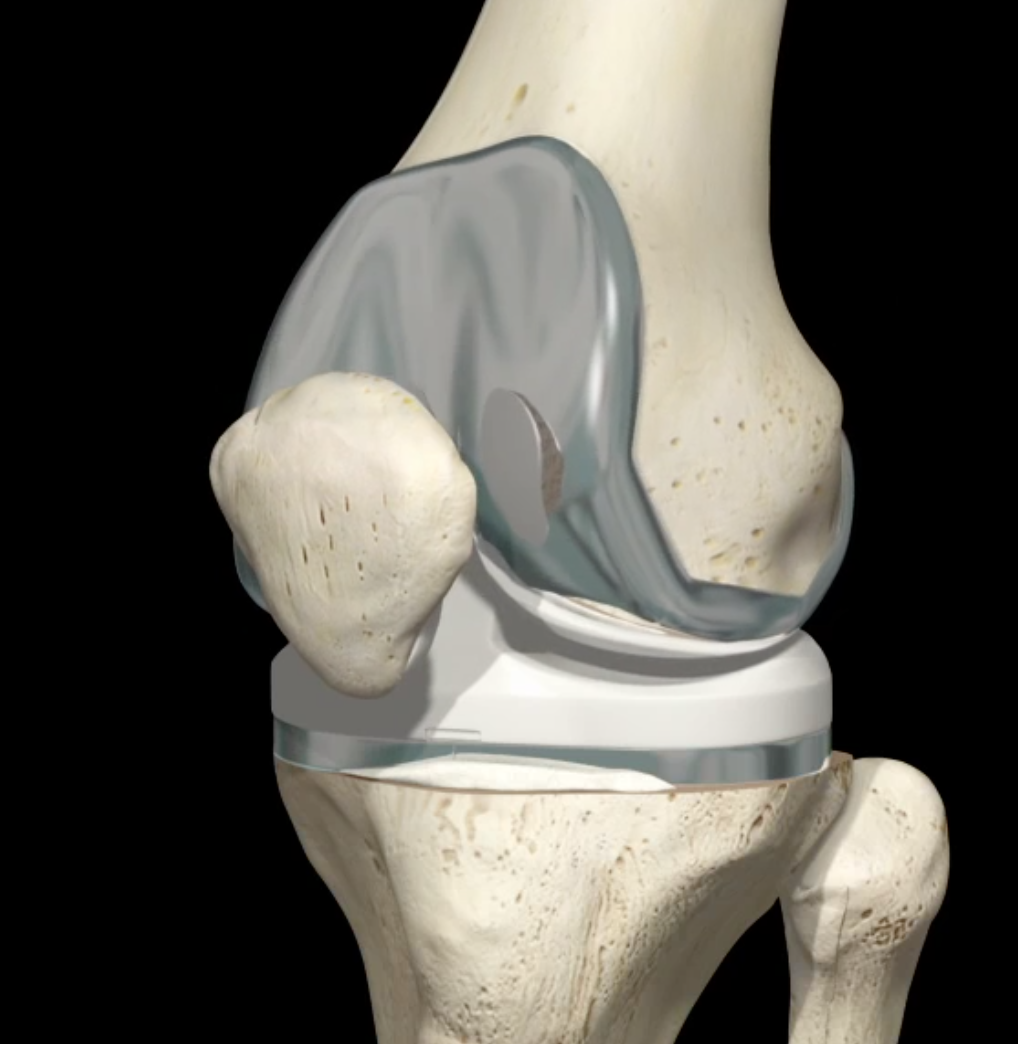
The replacement of the hip or knee joint (total hip arthroplasty – total knee arthroplasty), although it is a major operation, represents one of the main achievements of surgery in modern times.
The improvement in quality of life is almost equivalent to that after arterial bypass surgery in the heart and patients experience a huge improvement in mobility and a dramatic reduction in pain levels
Theoretically, a joint can be replaced as many times as necessary. However, each successive operation is usually less successful than the previous one. As a result, in younger patients we are usually cautious when recommending such surgeries. The basic principle of a total joint replacement is to remove the arthritic area and replace it with an artificial, synthetic material.
SURFACE ARTHROPLASTY (RESURFACING)
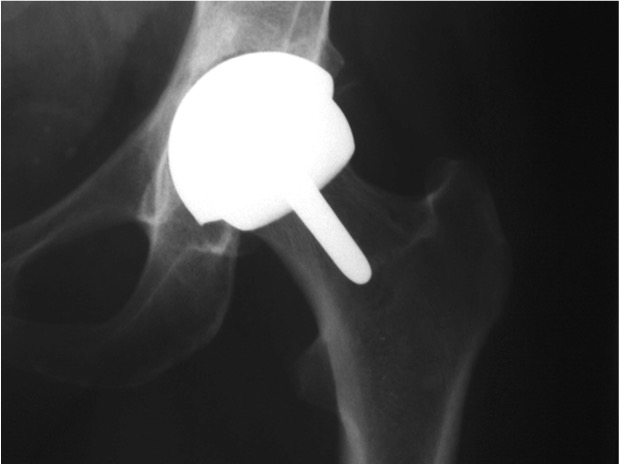
For the youngest patient with an osteoarticular hip, the arthroplasty surface surgery has been developed. This involves placing a cup on the spherical head of the hip and a metal prosthesis on the acetabulum.
The advantage of this technique is that less bone is removed from the patient than in a complete total arthroplasty, resulting in more bone available to the surgeon when a total arthroplasty is required in the future.
The result is to gain time, while the future results of an arthroplasty tend to be better. The international data on surface arthroplasty are encouraging. However, they remain inferior compared to those of total arthroplasty. In addition, in previous years there have been objections regarding some local reactions, which were observed in a percentage of patients who underwent surface arthroplasty.
To sum up, modern arthritis treatments are aimed not only at relieving pain and inflammation but are primarily aimed at improving the mobility and quality of life of patients.
With the right diagnosis and an individualized approach, it is possible to achieve effective control of symptoms and delay the progression of the disease, ensuring better joint functionality over time.
If you suffer from knee or hip arthritis, trust a physician with years of experience and leadership in the field of reconstructive surgery. Orthopaedic Surgeon Anastasios Lilikakis is the Director of the Third Orthopaedic Clinic of the Athens Euroclinic and the President of the Department of Hip & Knee Reconstructive Surgery of EEHOT. Contact us and book your appointment to receive personalized treatment.

 Hip Osteoarthritis

 +30 210 7292002
 alilikakis@yahoo.com