Hip & Knee Arthroplasty Review
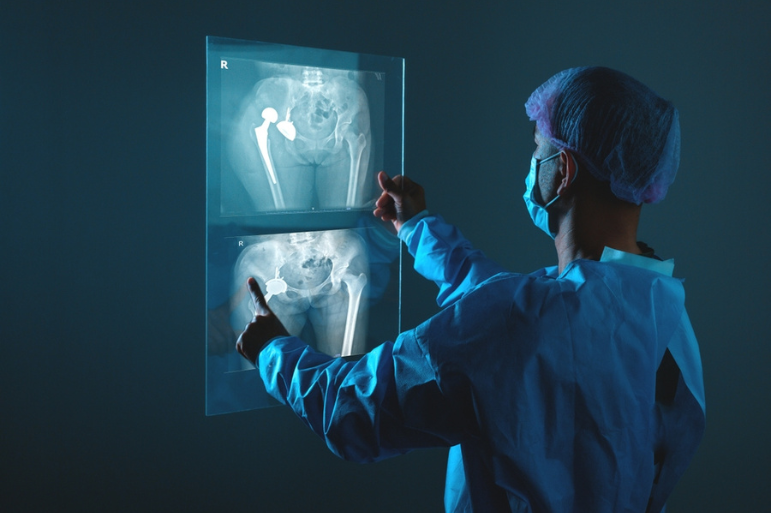
What is defined as a hip and knee arthroplasty revision?
Total Arthroplasty Revision is the surgical procedure to correct a previous joint that has failed and replace it with a new one. Total Hip and Knee Arthroplasty is one of the leading modern medical achievements.
These operations have relieved millions of patients of long-term severe pain and restored joint mobility. In this way, the quality of life of people who were once “doomed” to these parameters has been dramatically upgraded.
For what reasons is hip and knee arthroplasty revision necessary?
The survival of arthroplasty in most cases covers the entire life of patients. However, in an initially small percentage (1-2% per decade) that increases over the years (up to 10%), resurgery is required.
One reason that may lead to arthroscopy revision is its aseptic relaxation. This can happen when wear products produced from old materials pass through the interface between the prosthesis and the bone, which they corrode (osteolysis). Thus, the artificial joint relaxes. Another cause may be an infection of arthroplasty (septic relaxation). A fracture after an accident can also be a reason to review a total hip or knee arthroplasty. Other causes may involve improper placement during the initial intervention or failure of the materials. In these cases, the revision is usually done early, i.e. a short time after the initial operation. A less common cause is the dislocation of the artificial joint, which mainly concerns, but not exclusively, hip arthroplasties.
The need for revisions has increased a lot and is expected to increase even more in the future. This increase is expected due to the large number of arthroplasties performed on young and active people and the extension of our life expectancy and average life.


What does the decision to intervene in the revision depend on?
The decision to review hip and knee arthroplasty is the result of taking into account many factors.
These factors are the following:
- Symptoms (pain, lameness) and their intensity
- The cause and magnitude of the problem
- The extent and location of osteolysis, if any,
- The existence of an infection
- The rate of worsening of symptoms and radiological findings
- Age
- The general state of health of the patient
In any case, the revision of a hip or knee arthroplasty for the Orthopedist is a surgical challenge, an ethical obligation and a personal responsibility.

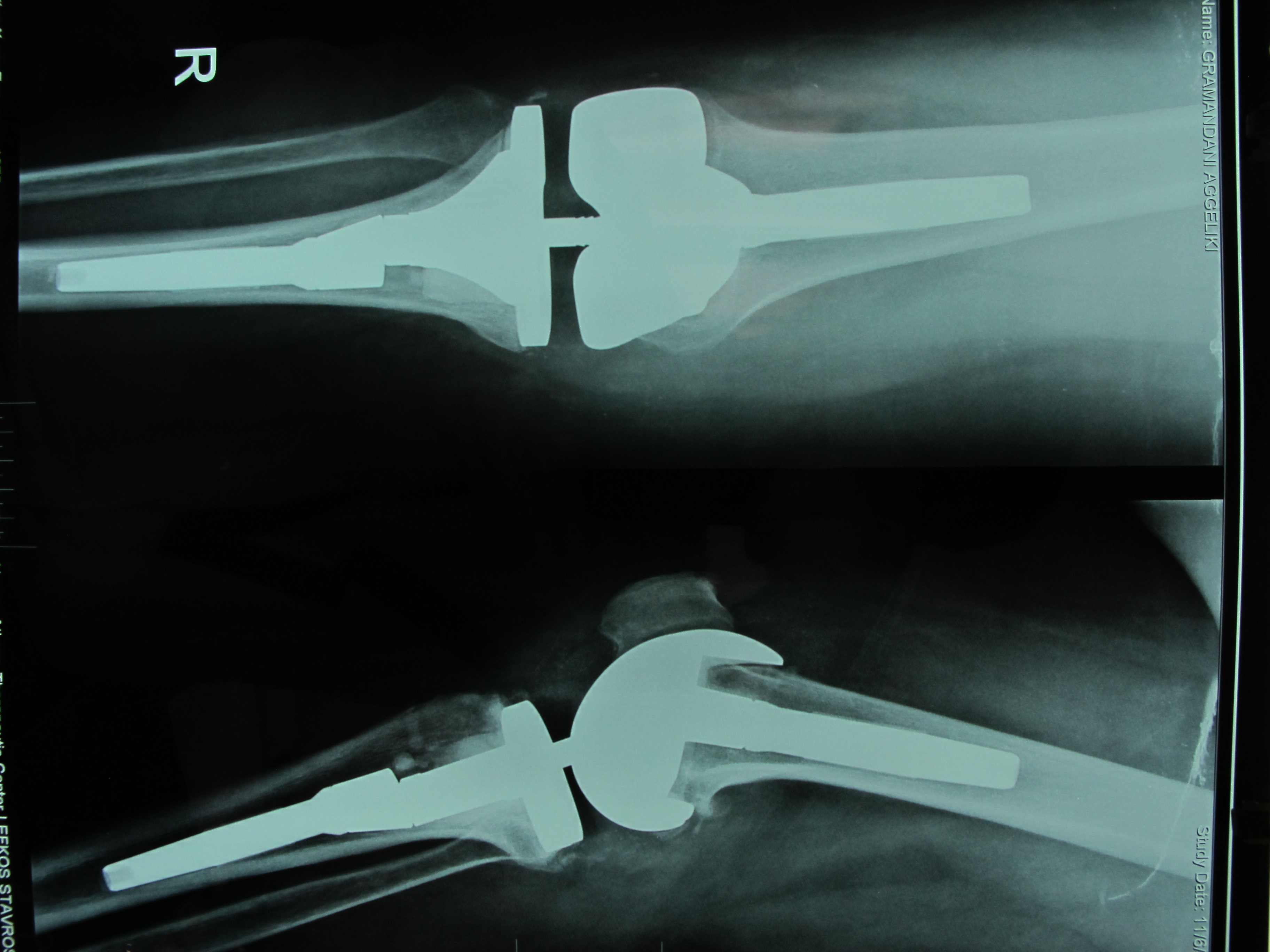
Hip and knee arthroplasty revision planning
The planning of the operation begins well in advance of the scheduled date of the operation. In particular, the revision may concern a part of the arthroplasty or all of them.
It is necessary to inform the patient and his close family or friends in detail. The information should include information about the problem that has arisen, how to correct it, understanding the difficulties and the need for cooperation.
At the practical level, the failure-failure mechanism of the initial arthroplasty is first highlighted. Then, the imaging test (X-rays, CT scans, skeletal scintigraphy, blood tests, etc.) It specifies the problem and foreshadows the quality of the bone, the deficits and the way of fixation.
In addition, care is taken of the appropriate infrastructure, the existence of the necessary tools, the supply of all possible implants that will be needed and the safeguarding of blood.
The operation requires excellent organization of the surgical team (experienced, suitable and specialized partners). This ensures the strict implementation of the simplest and most effective plan, as well as the existence of alternatives. Flexibility is needed, without amateur improvisations, and patience, since unexpected events are likely to intensify the complexity of the operation.
Anesthesia is usually epidural, combined with light sedation, which contributes to the complete calmness of the patient. On the contrary, General Anesthesia is preferred only in special cases. At the same time, with controlled arterial hypotension and the administration of appropriate medications, bleeding is significantly reduced and the need for blood transfusion is minimized. With these methods, postoperative analgesia is also ensured.
Stages of revision
Hip and knee arthroplasty revision surgery has distinct stages. More specifically, the stages are the following:
- The surgical approach
- The removal of old materials
- The implantation of the new materials
The surgical incision-access is the surgeon’s choice and serves the best possible conditions of visibility and flexibility. This is usually achieved with large incisions, which most often extend beyond the initial one. It is theoretically and empirically proven that small or inadequate access is sometimes associated with serious intraoperative complications (fractures, nerve & vascular damage, etc.).
During the removal of old materials, greater bone damage than those accumulated by the chronic process of loosening must be avoided in every way. For easier removal, controlled osteotomies are also chosen. It is not inappropriate to sometimes preserve certain parts of the old Arthroplasty (acrylic cement, wires, etc.).
This is followed by the identification of bone deficits, which are usually larger than those found on preoperative X-rays. Bone deficits are classified according to the anatomical location and extent of bone loss. These are the ones that determine the type of new materials that can achieve excellent stabilization, restoration of its normal anatomy and longevity.
Hip and knee arthroplasty review: Postoperative course
The postoperative course is completely individualized. Almost always, the patient’s elevation and mobilization is immediate. More specifically, in the first 12-24 hours and is done with the instruction and supervision of physiotherapists. The stay in the hospital is the minimum possible, i.e. 2-3 days, which is necessary to stabilize clinical and laboratory parameters.
Revision today is a successful operation, as long as strict specifications concerning the patient, the specialization and extensive experience of the surgical team and the reliability of the new materials are observed. However, it does not cease to be a large and demanding operation.
In order to halt the need for this intervention, emphasis should be placed, among other things:
a) the optimization of the materials of the initial arthroplasty.
b) the surgical technique of the initial operation that ensures the correct positioning and stabilization of the materials and biomechanical restoration of the joint.
In this area, new ideas and applications have been proposed in the last decade. However, the history of failed innovations in the relatively recent past can always be taken into account. The adoption of “new” methods must be rational and restrained. The focus should not only be on the immediate impression, but above all on the long-term positive result.
Knee and hip arthroplasty revision is a highly specialized surgical procedure. If it is necessary to undergo such an operation, you should trust a medical practitioner with many years of experience and a leading role in the field of reconstructive surgery. Orthopaedic Surgeon Anastasios Lilikakis is the Director of the Third Orthopaedic Clinic of the Athens Euroclinic and the President of the Department of Hip & Knee Reconstructive Surgery of EEHOT. Contact us and book your appointment.

 Hip Osteoarthritis

 +30 210 7292002
 alilikakis@yahoo.com