Hip fracture

What is a hip fracture?
A hip fracture is one of the most serious injuries of old age. It is usually the result of a low-energy injury, mainly from a fall to the same level.
The lesion can be located in the head of the femur, in the subcephalous part or lower, affecting the hip surface and the stability of the joint. Hip fracture mainly affects elderly patients with coexisting conditions and a burdened medical history, which increases morbidity and mortality.
It is estimated that in 2010 in the U.S., 258,000 hip fractures in the elderly were treated, resulting in a cost of $17 billion to $20 billion for the insurance provider.
Causes and risk factors
A hip fracture is most often caused by a fall at home or outdoors. In younger patients it can be caused by a more serious injury, but in older people it depends on bone density and general physical condition.
Also some risk factors are:
- osteoporosis (as it weakens the femur)
- The advanced age
- The female gender
- lack of vitamin D
- Decreased muscle power
- balance problems (significantly increase the likelihood of fracture)
Falls are often attributed to impaired coordination, neurological or cardiac problems, as well as environmental hazards inside the home.
Classification of hip fractures
In orthopedics, hip fractures are categorized by several systems. For a better understanding by the patient, the most practical division is into two main categories:
- Intra-articular
- Extra-articular
or otherwise
- Hypocephalic
- Intertrochanters
The choice of their treatment is based on the above distinction, the type of fracture but also the state of health and mobility of the patient.
Symptoms and clinical picture
The symptoms of a hip fracture appear immediately after the injury and are usually intense and characteristic.
The patient reports:
- sudden, severe pain in the hip area or groin area
- He can’t stand up or walk
- The lower limb appears shorter and facing outward, a finding particularly seen in a hypocephalic hip fracture or an intertrochanteric hip fracture
- swelling or tenderness in the hip area
In some cases, the pain may be milder but remains deep, localized to the joint, the head of the femur, or along the femur. The patient may try to move, but walking is extremely painful and unstable. Also, the inability to get up from the ground after a fall is a classic symptom and should be taken immediately for medical evaluation.
In elderly patients with a burdened medical history, the clinical picture may be accompanied by confusion or deterioration of the general condition, especially when the injury was caused by a fall at home. Early recognition of symptoms leads to proper diagnosis and rapid treatment.
Hip fracture: diagnosis
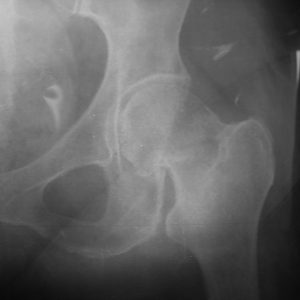
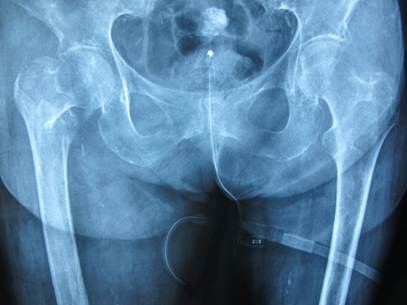
The diagnosis of a hip fracture begins with a detailed clinical examination and is confirmed by an X-ray of the hip area in two views.
Severe pain in the groin area and the inability to load the leg directly raise the suspicion of a hip fracture. If the initial X-ray does not clearly show the fracture, but the suspicion remains, especially in an elderly person, further examination is required.
Also, MRI has high diagnostic accuracy and can highlight fractures that are not evident on a simple X-ray.
Along with the imaging examination, a complete evaluation of the medical history is carried out , with an emphasis on cardiological, respiratory, as well as any previous diagnosis of osteoporosis.
Recording the patient’s functional status before the fall is crucial for treatment planning. For example, if the patient was autonomous in walking or needed support.
Additionally, laboratory blood tests, electrocardiogram, and preoperative screening complement the procedure, particularly when surgical treatment is planned.
Finally, the overall assessment depends on the general health and mobility of the patient, in order to formulate a safe and personalized treatment plan.
Hip Fracture: Surgical Treatment
Early surgical repair of hip fracture in the elderly is a key factor in improving the prognosis and reducing complications.
It has been shown that the patient is in better general condition immediately before the fall, while delaying treatment puts a strain on an already vulnerable organism, increasing the risk of complications. For this reason, surgery is ideally recommended within the first two 24 hours. It is also followed by immediate mobilization and walking if possible as well as a rapid return to the familiar environment.
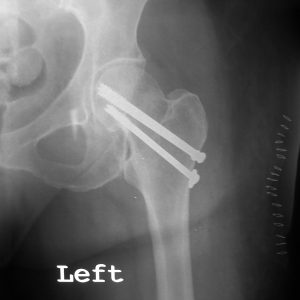
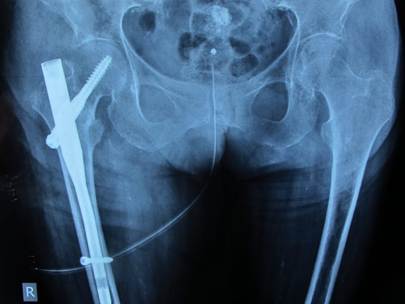
Regarding displaced fractures of the neck of the femur, they are usually treated with cochlea, while displaced fractures with arthroplasty, usually hemiarthroplasty or total hip arthroplasty in younger and active patients. Intertrochanteric and subtrochanteric fractures are treated with open reduction and internal osteosynthesis, mainly with an intramedullary hip nail or, in stable cases, with a sliding cochlea. Non-surgical treatment is extremely limited and concerns only very stable fractures or patients with a particularly burdened medical history and minimal pre-existing mobility.
At the same time, the coexisting health problems of the elderly often require the cooperation of the orthopedic surgeon with a pathologist, cardiologist, so that the care is comprehensive and safe.
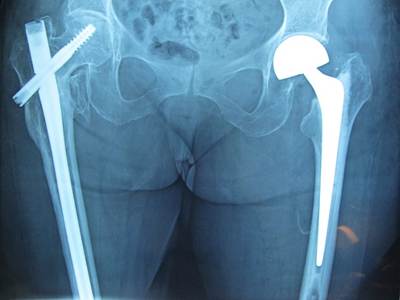
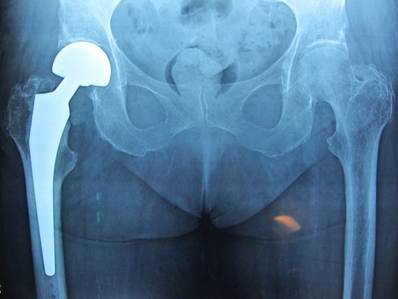
Hip Fracture: Postoperative Course and Rehabilitation
Early surgical treatment contributes significantly to the reduction of postoperative complications and the improvement of the overall prognosis. Prolonged lying down increases the risk of thrombosis, pneumonia, urinary tract infections and bedsores, especially in the elderly with a burdened medical history. For this reason, early mobilization and gradual walking with physiotherapeutic guidance is a key goal from the very first days after surgery.
Usually, the course of rehabilitation depends on age, general physical condition and level of mobility before the fall.
Organized physiotherapy focuses on:
- strengthening the muscles of the hip and lower limbs
- to improve balance
- in gait retraining
At the same time, emphasis is placed on the prevention of a new fall and the safe reintegration of the patient into daily activities. In addition, in many cases, the cooperation of doctors and physiotherapists is required, so that the return to everyday life is as fast and safe as possible.
Hip Fracture: Prevention
Hip fracture puts a significant burden on the body as well as its surgical treatment, which is a demanding procedure, especially in patients with already burdened health. For this reason, great emphasis is placed on the prevention of these fractures.
Various mechanisms have been proposed to prevent fall or fracture, such as:
- the use of special prophylactic means
- Preventive exercise and empowerment of the elderly
Unfortunately, the effectiveness of any instrument has not been proven.
The falls that cause fractures are usually attributed to the general condition of older people, namely:
- decreased muscle power
- impaired reflexes
- osteoporosis (mainly in women)
- decreased flexibility
- poor coordination of movements
- existence of various cardiological, neurological or other diseases (which is responsible for fainting episodes, instability, etc.)
If you or someone close to you suffers a hip fracture, immediate and specialized treatment is crucial. Trust a physician with years of experience and leadership in the field of reconstructive surgery.
Orthopaedic Surgeon Anastasios Lilikakis is the Director of the Third Orthopaedic Clinic of the Athens Euroclinic and the President of the Department of Hip & Knee Reconstructive Surgery of EEHOT, with extensive experience in the treatment of hip fractures and complex orthopedic cases.
Contactus and book your appointment so that you receive immediate, personalized and comprehensive therapeutic care.

 Hip Osteoarthritis

 +30 210 7292002
 alilikakis@yahoo.com