Hip Arthroplasty Review
What is a hip arthroplasty revision?
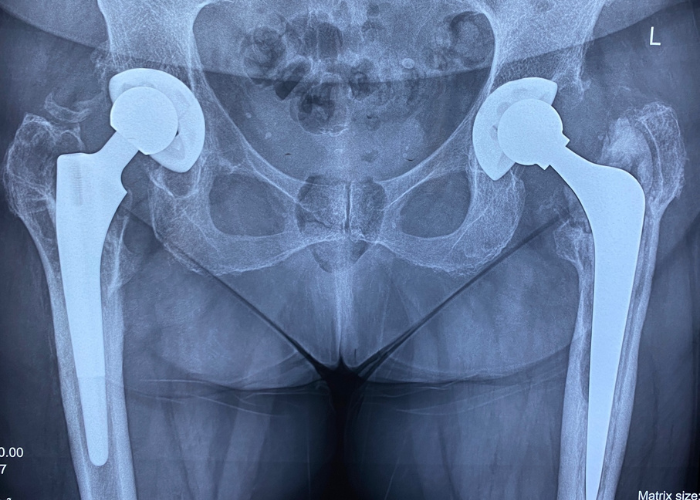
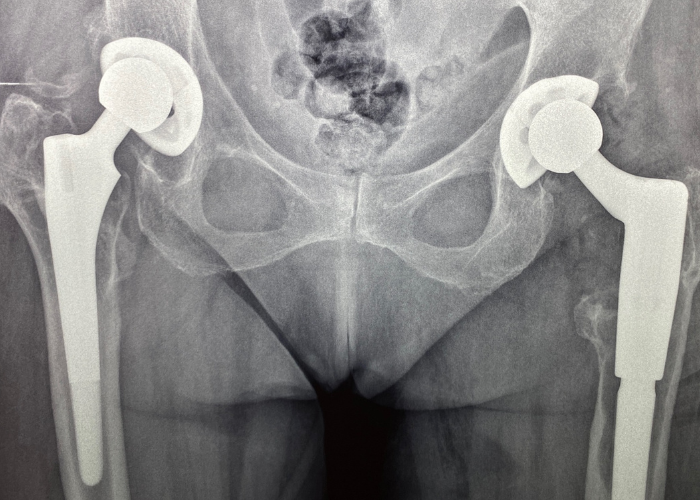
Total hip arthroplasty is a widespread routine procedure that has very high success rates. Hip arthroplasty revision is the operation we perform to correct a previous joint that has failed, and to replace all or part of the implants with new ones. It is by no means a routine operation, but it requires specialization and experience.
Hip arthroplasty revision is required in a small percentage of patients. Specifically, 1-2% undergo hip arthroplasty revision in the decade after the initial operation. However, this percentage has been increasing over the years.
The likelihood of revision increases over time, particularly due to wear and tear on the materials and the bone. Increasing life expectancy and operations on younger and younger people result in patients living much longer than intentions and consequently intensify the need for revisions. In addition, a young person subjects the artificial joint to much greater strain, due to increased demands in his daily life. For the surgeon, each revision is a separate surgical challenge and requires study and preparation.
Reasons for revision:
When reviewing hip arthroplasty, the implant that presents a problem (not necessarily all implants) is replaced by a new one. Problems that can lead to revision of the initial operation can be:
- The normal wear and tear of materials caused by the time that has elapsed since the initial operation. Implants have an average lifespan of 15-25 years. Lifespan also depends on the age of the patients, with wear and tear being greater in younger people due to increased activities. Since the operation is also performed on young patients and given the increased life expectancy, as mentioned above, it is expected that after a few years the operation will need to be repeated.
- The initial placement of the materials in a not optimal orientation due to technical difficulty can cause premature loosening of the artificial joint. Implants with undocumented quality and lifespan may also contribute to this.
- An accident can cause a bone fracture or dislocation of the arthroplasty and require reoperation.
- Joint infection, early or many years after the initial operation: The infection can occur either immediately after the operation or later, due to the infection of another part of the body and the blood-borne spread of the microbe in the artificial joint. Arthroplasty infections are a particular challenge, as they require multiple stages of treatment.
- Osteolysis. The wear products of the prostheses, and especially of the acetabular insert (polyethylene) pass through the bi-surface between the implant and the bone. Thus, it causes relaxation of the prosthesis and deterioration of the bone, called osteolysis. Extensive osteolysis can lead to severe bone damage, requiring personalized surgical solutions.
What is the preparation for the operation?
The first step is to assess the patient’s condition and his joint. Through imaging and blood tests, the cause behind the failure of arthroplasty is determined. After the patient undergoes a complete imaging examination (X-rays, CT scans, scintigraphy or others), the Orthopedic surgeon will prepare the appropriate surgical plan. It is important that the patient is fully aware of the condition of his hip and understands the necessity and the goal of the revision. Informing the patient and their family in detail about the procedure and possible complications is a key part of the procedure.
Arthroplasty revision is a major operation and therefore needs:
- Preoperative assessment of the patient’s general condition
- Regulation of possible cardiological, respiratory problems, diabetes mellitus, etc.
It is very likely that a transfusion will be needed, unlike what happens in a primary arthroplasty. Before the operation, the patient will have the necessary preoperative check-up, which includes chest X-ray, electrocardiogram, blood tests, but also any other examination that may be needed for full preparation. The surgeon, in collaboration with the anesthesiologist or other specialties that monitor the patient, will give clear instructions to the patient on the necessary modifications that may be needed in the medication he is receiving.
In addition, care is taken to order and supply all the required tools and implants, which will cover all possible intraoperative scenarios and cases as well as to ensure blood for postoperative transfusion.


What happens when reviewing hip arthroplasty?
The operation is performed with the patient under sedation and regional (spinal or epidural) anesthesia or under general anesthesia, which will be judged by the anesthesiologist based on the patient’s general health condition and the expected duration of the operation. This ensures that he will not feel pain during the procedure and will be calm. Initially, the incision and surgical access are made to the point where the surgeon deems that he will have better visibility and ease of movement in any case. Opting for a longer surgical access ensures better visibility and reduces the risk of intraoperative complications, such as fractures or nerve damage. Minimal intervention (MIS), rapid recovery techniques and robotic surgery have no place in the revision of hip arthroplasty.
Then, the old implants are removed. In cases where it is deemed necessary, the surgeon performs osteotomies for their easier and with less loss of healthy bone removal. Once the bone has been properly prepared, the new implants are placed and stabilized. Stabilization is carried out either by using bone cement or by using titanium implants with special coatings. Finally, in cases of infection, the revision may have to be done in two stages. In the first operation, the old materials are removed and the infection is treated. In the second, the new joint is placed on a healthy bone.
What to expect after hip replacement revision?
After the operation, the patient remains in the hospital for 2-3 days, while he can be mobilized immediately. The Orthopedic Surgeon will create a specific recovery plan for each patient. Recovery is gradual and can take up to 6 months. The duration of recovery depends on the condition of the bone and the cause that led to the surgery. The patient usually walks initially with a walker. Later, he can use bacteria for the time deemed necessary by the surgeon based on regular radiological examination. The most important part of recovery is the exercise program that the patient must do daily to strengthen the joint.
Why should I trust the Orthopedic Surgeon Dr. Anastasios Lilikakis for the revision of hip arthroplasty?
The revision of hip arthroplasty is carried out successfully, correcting the problems of the artificial joint. However, it is more demanding than the initial operation, so experience and detailed planning are needed to bring the desired results. The Orthopedic Surgeon Dr. Anastasios Lilikakis has specialized in reconstructive hip and knee surgery, is the Director of the Third Orthopaedic Clinic at the Athens Euroclinic and the President of the Department of Reconstructive Hip and Knee Surgery of the Hellenic Society of Orthopaedic Surgery and Traumatology. If you are experiencing problems after your hip replacement you have had, you may need a revision. Contact us directly to receive personalized diagnosis and treatment.

 Hip Osteoarthritis

 +30 210 7292002
 alilikakis@yahoo.com