Robotic Knee Arthroplasty
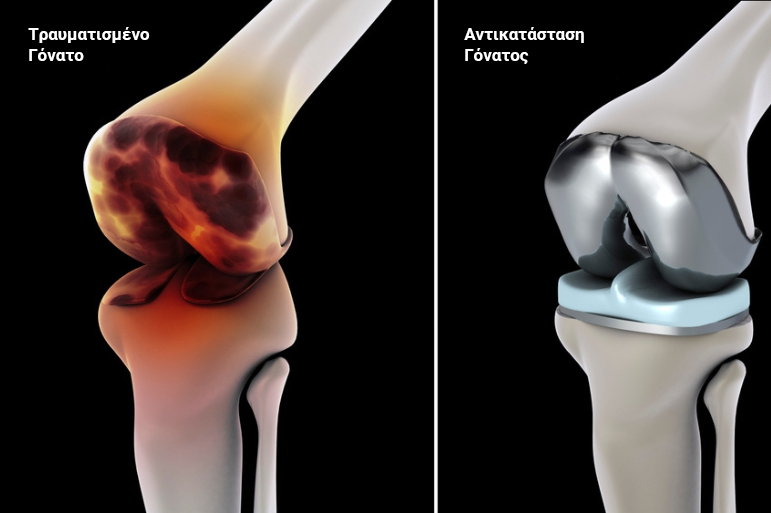
What is robotic knee arthroplasty?
Knee arthroplasty is the surgery of choice for the treatment of severe osteoarthritis or other degenerative lesions of the joint, when conservative treatment fails. Over the years and the evolution of technology, new, more sophisticated techniques have been developed, with robotic arthroplasty being at the cutting edge of innovation. In particular, robotic knee arthroplastyis based on the use of specialized robotic systems, which allow for accurate implant placement and excellent surgical design.
Who performs robotic knee arthroplasty?
Robotic knee arthroplasty is not an automated procedure. In other words, the role of the robot is not to replace the surgeon and perform the operation autonomously. Instead, it acts as an advanced tool in the hands of the surgeon. Specifically, each action is performed by the surgeon himself, who guides and is guided by the robotic arm with the help of a special console. In other words, there is an interaction between robot and surgeon, based on the information and data they exchange.
Therefore, a prerequisite for the success of robotic arthroplasty is the training and certification of the Surgeon and his team, as well as the experience in conventional arthroplasties, to adapt the strategy where necessary.
Who can undergo robotic knee arthroplasty?
Patients who need to undergo knee arthroplasty are usually suitable candidates for robotic arthroplasty as well. However, the final decision will depend on the discussion with the orthopedic surgeon. In general, the technique is mainly applied to patients with end-stage osteoarthritis of the knee. It is particularly suitable for:
- Difficult cases with previous surgeries in the area
- Anatomical abnormalities of the femur or tibial bone
- Younger patients with increased activity
- Bilateral osteoarthritis of the knee, where simultaneous surgery on both extremities is considered

What does the preoperative preparation include?
Preparation for robotic knee replacement is no different from traditional and includes both medical examinations and practical actions of the patient that contribute to a faster and safer recovery.
Before surgery, a complete preoperative check-up is required to assess the patient’s general health condition. Usually included:
- Blood tests
- General urine examination and culture
- Chest X-ray
- Electrocardiogram and cardiac assessment
- Blood crossing so that blood bottles are available in case of transfusion, although in most cases it is not necessary.
Also, patients can adopt specific practices that will help them recover faster and with fewer complications:
- Smoking cessation
- Weight loss
- Medication adjustment
- Good physical condition
Finally, the physiotherapist and the surgeon will suggest changes that can be made to the configuration of the home environment (for example, high seats, support bars), in order to facilitate the patient’s recovery.
How is robotic knee arthroplasty performed?
The operation lasts about an hour and is performed under regional anesthesia. The process involves three main stages: recording, planning, and execution.
Initially, the robotic system records the anatomical structures of the knee in real time. At the same time, the surgeon evaluates the elasticity and balance of the ligaments, which is a critical element for the stability of the prosthesis.
With the data collected, the surgeon creates a digital surgical plan so that the placement of the implants can be fully adapted to the patient’s anatomy.
The surgeon then performs the required osteotomies with the help of the robotic arm. The robot acts solely as a tool and does not autonomously perform any part of the operation. The surgeon has complete control over each stage.
After removing the damaged cartilage and hypochondrial bone, a test prosthesis is first placed to check stability and range of motion. This is followed by the placement of the final prosthesis, which is stabilized either with bone cement or with a special coating . The app’s accuracy is verified through digital measurements and compared to the original design.
What does postoperative rehabilitation include?
The robotic technique accelerates recovery, reducing postoperative pain and hospitalization. In particular, patients are mobilized within a few hours and discharged within 1-2 days. A very important part of rehabilitation is the intensive physiotherapy and strengthening program designed by the physiotherapist and the orthopedist.
The return to daily activities is done within 3-4 weeks. However, patients can expect a full recovery over a period of 3-6 months.
What are the advantages of robotic arthroplasty?
- Absolute accuracy and alignment optimization
- Personalization of the prosthesis to the patient
- Minimal surgical trauma and blood loss
- Reduced postoperative pain
- Rapid mobilization and shorter hospitalization
- High satisfaction and functional recovery rate
- Ability to deal with complex and difficult incidents
Orthopedic Surgeon Anastasios Lilikakis, Director of the Third Orthopaedic Clinic of the Athens Euroclinic and President of the Department of Hip & Knee Reconstructive Surgery of EEHOT, applies robotic knee arthroplasty with experience and safety, based on the most modern protocols of minimal intervention and rapid recovery. Contact us to schedule your appointment.

 Hip Osteoarthritis

 +30 210 7292002
 alilikakis@yahoo.com