Trochanteritis
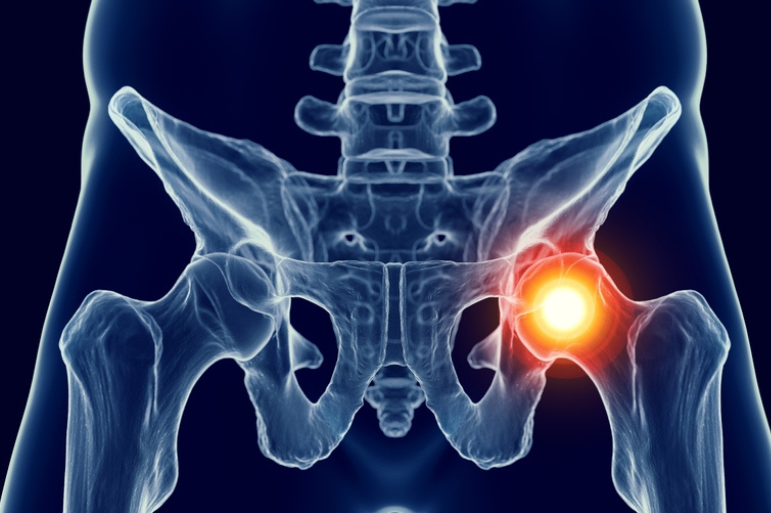
What is trochanteritis?
Trochanteritis, also known as trochanteric bursitis, is an inflammatory condition that attacks the serous follicle of the major trochanter. The condition can cause significant functional limitation, mainly due to the pain it causes, making diagnosis and early treatment particularly important to avoid chronic burden.
The serous pouch is a thin cavity with fluid, practically a cyst, that is naturally inserted between bone and soft tissues, such as tendons and muscles. Such pockets are found in various places in addition to the major trochanter, such as the elbow (the olecranium), the knee (in the tibial curvature) and elsewhere. Its role is mechanical, as it acts as a protective “cushion”, limiting friction on the bone.
Who is most prone to developing trochanteritis?
Trochanteritis most often affects women, probably due to the morphology of their pelvis, and middle-aged and elderly people. It affects men and young people less often. It can also affect athletes in sports that systematically strain the hip area, such as runners, cyclists, soccer players and swimmers.
What are the causes and predisposing factors of its occurrence?
Trochanteritis can be caused by any factor causing mechanical irritation or injury to the serous bursa in the area of the major trochanter. Many tendons of hip muscles (e.g. middle and small gluteus) are attached to the major trochanter, which contribute to the movement of the hip, either as abductors (abduct, i.e. remove the hip) or as rotators (twist either inwards or outwards the joint). As a result, trochanteritis is closely associated with tendinitis of these muscles, mainly of the tendon fascia, but also of the gluteuses.
The most common causes are:
- Repetitive mechanical stress, such as fast and prolonged walking, prolonged standing, climbing and descending stairs. Therefore , professions with intense physical exertion or manual labor more often experience hip trochanteritis
- Acute or chronic hip injuries may cause an inflammatory reaction, e.g. a fall on the hip area. Similarly, sports injuries to athletes of some sports, as already mentioned, can cause minor injuries that may cause trochanteritis.
- Morphological or anatomical abnormalities of the hip joint or lumbar spine. For example, the presence of calcifications in the absorption of the gluteal muscles, marked leg irregularity, chronic lumbar pain that causes alteration in gait, etc. may cause a change in the distribution of loads and chronic irritation of the serous bursa.
- Autoimmune diseases (such as rheumatoid arthritis, polymyalgia or psoriatic arthritis), systemic diseases, such as inflammatory arthritis, psoriasis, diabetes mellitus and thyroid disorders, have been associated with an increased incidence of trochanteritis.
- Previous hip surgeries may cause irritation of the serous bursa, either due to changes in the biomechanics of the joint, or due to the proximity of the surgical incision to the trochanter area.

What are the symptoms of trochanteritis?
The main symptom of trochanteritis is pain and tenderness , which is most commonly found on the outer surface of the hip or buttocks.
It usually has a progressive onset and worsens with activity. More specifically, there is an increase in the intensity of pain when ascending or descending a ladder, walking or standing for a long time.
Patients report discomfort when getting up from a sitting position, while the worsening of pain when lying down on the affected side is characteristic, which affects the quality of sleep.
How is the diagnosis made?
The diagnosis of trochanteritis is primarily based on taking a detailed history and clinical examination of the patient. The patient is asked to describe their symptoms, their duration and any events associated with their onset. The presence of local sensitivity on the outer surface of the hip is evaluated, which usually extends to the entire outer surface of the thigh.
To confirm the diagnosis and rule out other ailments, imaging methods can be used. X-ray helps rule out bone or intra-articular pathology, while ultrasound or MRI offer accurate imaging of soft tissues in the area, confirming the diagnosis of trochanteritis.
The Treatment of Trochanteritis
Treating trochanteritis in most cases does not require surgical intervention. It is primarily based on conservative methods aimed at reducing inflammation and restoring hip functionality.
In particular, conservative treatment includes:
- Modification of activities: Avoid movements that cause irritation of the hip area, such as prolonged walking and standing, climbing stairs, etc.
- Physical Therapy: Personalized stretching and strengthening programs for hip muscle abductors.
- Administration of Non-Steroidal Anti-Inflammatory Drugs (NSAIDs): Medication to relieve pain.
- Topical corticosteroid injections: In cases of persistent pain, steroid injection contributes to rapid remission of symptoms.
- Platelet-Rich Plasma (PRP) Injection: Modern regenerative therapy that uses growth factors from the patient’s own blood.
Surgical treatment is an option only in extremely rare cases, when all conservative means have failed and the symptoms remain intense.
In particular, the indication for surgical intervention is set exclusively by the treating Orthopedist, after a complete clinical and imaging evaluation. The operation is performed with hip arthroscopy, offering a minimally invasive approach.
Through two small incisions, a camera and special microtools are inserted that allow for the precise location and removal of the inflamed serous bursa. Arthroscopy offers rapid recovery, minimizes postoperative pain, and significantly reduces the risk of complications. It is a safe and effective method when applied to appropriately selected patients with resilient, chronic trochanteritis.
Prevention of trochanteritis
The following prevention measures are very important to protect the hip area from trochanteric bursitis:
- Avoiding repetitive movements that strain the hip area helps prevent inflammatory reactions.
- The use of footwear with adequate shock absorption.
- Regular strengthening of the muscle groups of the hip and trunk reduces the risk of overuse and irritation of the anatomical structures of the joint.
- Maintaining a normal body weight limits mechanical loads on the hip joint.
- Proper exercise technique and intensity adjustment help avoid minor injuries and the occurrence of trochanteritis.
If you experience symptoms that suggest trochanteritis, trust a medical practitioner with years of experience in treating hip conditions and a leading role in the field of reconstructive surgery. Orthopaedic Surgeon Anastasios Lilikakis is the Director of the Third Orthopaedic Clinic of the Athens Euroclinic and the President of the Department of Hip & Knee Reconstructive Surgery of EEHOT. Contact us and book your appointment.

 Hip Osteoarthritis

 +30 210 7292002
 alilikakis@yahoo.com